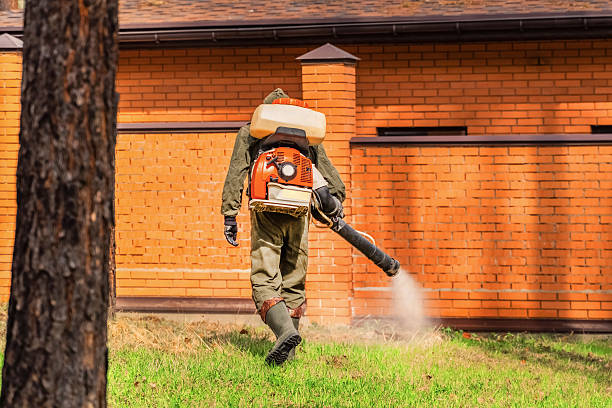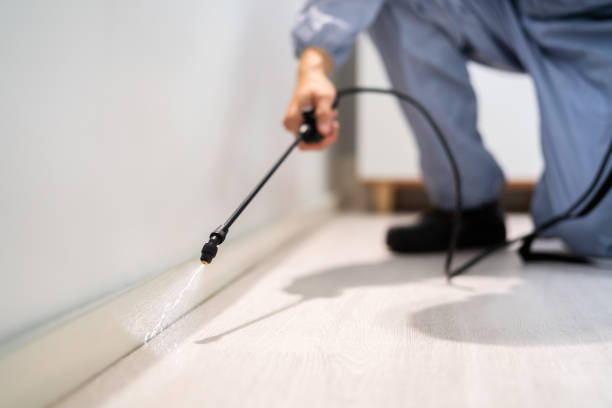
Repellent sprays scatter ant scouts, split colonies into satellite nests, and cause the population to spread. Non-repellent bait transfer technology reaches the queen. Show Me Pest Control uses the correct method in Ketchikan -- the one that ends the infestation instead of redistributing it.
Non-repellent bait transfer technology, species identification, and perimeter treatment work together as a system.
Every treatment plan starts with species ID. The product we apply for odorous house ants is not the same product we apply for carpenter ants or fire ants -- the species determines the bait formulation, placement location, and follow-up schedule.
Non-repellent bait placed in the right location collapses the population from the center out. Workers spread it to every member of the colony -- including the queen and the brood -- without ever detecting the threat. A correctly executed bait program is irreversible for the colony.
We apply non-repellent residual insecticides along the foundation perimeter, at entry points, and along the major foraging corridors. Ants walk through the treated zone, carry residual on their bodies back to the colony, and spread it to other workers -- the same transfer mechanism as gel bait.
Carpenter ants do not eat wood -- they excavate it for nesting. Finding sawdust-like frass near wood members, hollow-sounding structural timbers, or large black ants near window frames may indicate an established carpenter ant colony in the wood structure. Void injection and perimeter exclusion are the correct responses.
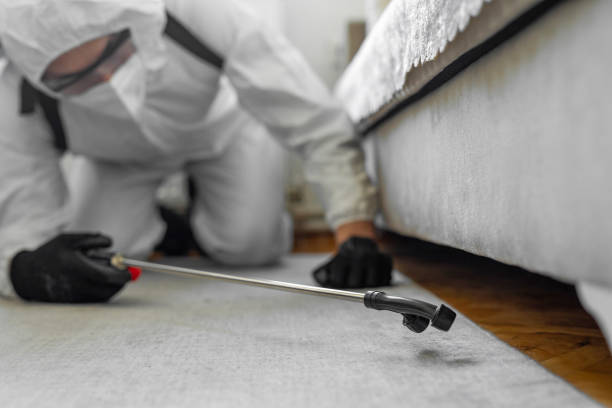
A typical ant colony visible in your kitchen represents only 10 to 20 percent of the total population. The queen, developing brood, and satellite nests are located in harborage zones -- behind walls, under flooring, inside cabinets, or in the foundation perimeter outside the structure. When a repellent product is applied to a foraging trail, the scouts in contact with the chemical signal the colony to retreat and relocate. The colony does not die -- it splits. New satellite nests establish in areas farther from the treated zone, the colony footprint increases, and the homeowner sees new trails appearing in new locations within days.
The mechanism that makes non-repellent bait effective is trophallaxis -- the direct food transfer between ants that is the basis of colony nutrition. When a forager carries non-repellent bait back to the colony, it distributes the active ingredient through this feeding behavior to every ant in the harborage zone, including the queen and the brood. Because the active ingredient is undetectable, the colony does not avoid the bait station and does not relocate. The population collapses from the center out, with activity dropping progressively over 3 to 10 days as the active ingredient moves through the population.
Ant problem that gets worse every time you spray in Ketchikan? Call +1-866-315-0243. Our protocol does not scatter the colony, it eliminates it. Non-repellent bait, species ID, correct placement.
A separate failure mode with consumer bait is aversion development. When an ant colony has been exposed to a bait formulation multiple times, it develops a behavioral avoidance response -- workers begin to identify the attractant compound as a threat rather than a food source. This is why the hardware store bait works the first time a homeowner places it, then stops working when they replace the station with the same product. Professional programs use rotating formulations and professional-grade attractants specifically designed to prevent this aversion cycle.
Carpenter ant treatment begins with confirming that you have carpenter ants rather than any other large black ant species, and confirming that an active gallery exists within the structure. Coarse sawdust-like frass near structural wood members, particularly window headers, door frames, sill plates, and roof soffits -- especially where moisture damage is present or was repaired in the past -- is the primary diagnostic sign. Hollow-sounding timbers when knocked and large black ants near the frass location confirm the assessment. Void injection delivers the active ingredient directly to the gallery where the colony is nesting, rather than spraying the surface where foragers are observed.
Ant activity in Ketchikan, AK intensifies at specific points in the season. Spring colony expansion -- when overwintering colonies produce new reproductive individuals and begin satellite nest development -- is the highest-pressure period and the most important time to maintain a non-repellent perimeter barrier. Summer heat drives ant foraging into cooled interior spaces as colonies seek moisture and protein sources. Late summer and fall produce ingress pressure as colonies prepare for the colder months by relocating into the thermal stability of foundation zones and wall voids. A proactive seasonal program that addresses each of these pressure windows costs significantly less than reactive treatments after a full indoor infestation establishes.
Species identified, harborage zone mapped, protocol explained -- on the first call.
Call +1-866-315-0243Six services covering the full range of ant situations in Ketchikan and surrounding areas of Ketchikan, AK.

Species ID determines bait formulation, placement location, and perimeter approach. We confirm it before selecting any product.
Non-repellent gel and granular bait placed where the colony feeds, not where it travels. The entire population is reached.
The perimeter works by transfer, not by repulsion. Workers cross it, carry it, and bring it back to the harborage.
Carpenter ant treatment requires direct gallery access. Void injection delivers the active ingredient to the source -- not to the foragers you can see.
Fire ant mound treatment combines direct mound injection and broadcast treatment for large yards with multiple active mounds.
Recurring visits that maintain a non-repellent perimeter through the spring budding phase and summer heat prevent the conditions that allow colonies to establish indoors.
Clear, sequenced, no surprises.
We ask about trail patterns, ant size, and location. Species identification begins on the call.
We locate the harborage zone before placing bait. The placement location is more important than the product.
Interior and exterior treatments are applied the same visit. The two pathways reinforce each other.
Follow-up confirms activity trending to zero. If secondary nests are present, they are identified and treated at this visit.
Three situations where species identification and non-repellent bait produced results retail products could not.
We had been spraying a trail every single day for three weeks. The trail kept reappearing in the exact same location every morning. Show Me Pest Control identified odorous house ants with a satellite nest inside the wall behind the dishwasher. Non-repellent gel placed inside the cabinet toe-kick cavity. Colony confirmed collapsed at the follow-up visit. We have not seen a trail since.
Hardware store baits stopped working after the second round. Show Me Pest Control explained the aversion issue -- colonies learn to avoid certain attractant compounds after repeated exposure. Different professional formulation, correct placement. The colony was gone in a week.
Found large black ants near my living room window and a pile of coarse sawdust in the windowsill. A previous pest company told me it was just regular ants and sprayed around the outside. Show Me Pest Control immediately identified it as a carpenter ant gallery in the window header. Void injection, sealed the entry point. No frass production at the 3-week follow-up. That spray company missed it completely.
Same-day assessment in Ketchikan. Species identification and non-repellent bait placed on the first visit.
Call +1-866-315-0243